


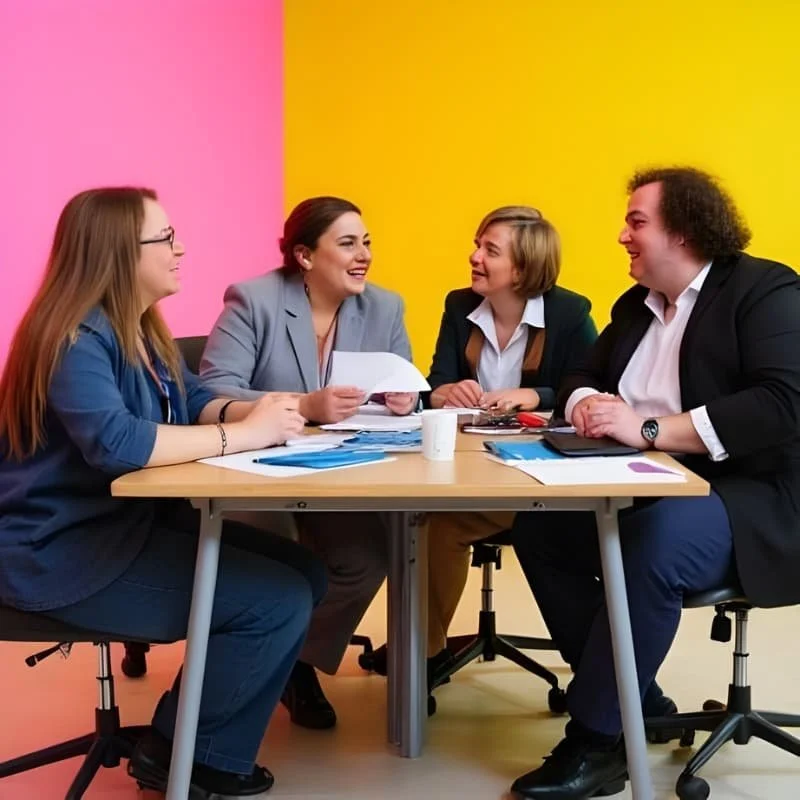
Stress & Sustainable Performance
A focused workshop equipping leaders to create sustainable high performance, rather than stress and burnout.
Stress in organisations is often framed as an individual resilience issue.
In reality, it is often shaped by leadership behaviour.
Unclear expectations, inconsistent decision-making, avoided conversations, and reactive communication create unsustainable cognitive load and emotional strain.
Ambiguity makes performance expectations unclear. Managers carry issues they should address earlier. Senior leaders firefight rather than prioritise.
Over time, the organisational impact becomes visible through stress-related absence, ER issues and regrettable attrition.
When pressure is driven by avoidable leadership behaviour, these costs are not inevitable.
Sustainable high performance depends on the quality of leadership conversations that set direction, manage workload, handle challenge and provide support.
Stress and Leadership Style
22 million working days were lost due to work-related stress in 2024/25 (TUC)
In 2025 stress was a factor in 25% of short-term absence (up to 4 weeks) and 28% of long-term absence. (CIPD)

Strengthening leadership behaviour to create sustainable high performance
We work with leadership behaviours that either increase or reduce avoidable stress at work.
Delivered as a focused workshop, we examine how expectations are set, how workload is discussed, how boundaries are respected, and how difficult conversations are handled.
Leaders explore the practical ways in which unclear direction, delayed feedback, inconsistent standards or unmanaged conflict create unnecessary cognitive and emotional strain within teams.
The workshop is structured around real scenarios from participants’ own contexts.
We look at pressure patterns, escalation dynamics, and the conversations that should happen earlier.
Leaders build skill in setting clearer priorities, addressing issues directly, managing performance fairly, and supporting others without over-functioning or absorbing everything themselves.
Where appropriate, individual coaching can be integrated to support leaders in recognising their own stress triggers, decision patterns under pressure, and leadership habits that may unintentionally create strain for others.
The focus is not on removing pressure. It is on strengthening leadership practice so that pressure is proportionate, transparent and sustainable.
“A stressed workforce is incompatible with sustainable high performance.”
Ready to explore how this could help your organisation?
FAQs
-
Leaders reduce stress by shaping the conditions people work within.
Clarity and feedback about priorities and expectations reduces unnecessary cognitive load.
Psychological safety allows people to raise concerns and admit mistakes without fear.
Realistic demands and early conversations about capacity prevent pressure from building quietly.
A leader’s own stress response matters too. Reactivity, avoidance or inconsistency under pressure amplifies strain across a team. Calm, clear communication contains it.
Stress is also systemic. Unclear processes, bottlenecks and rework create avoidable pressure. Addressing these makes performance more sustainable.
-
The focus of this workshop is on building sustainable organisational performance by combating sources of unnecessary stress.
Leaders will explore their own pressure patterns, boundaries and triggers, and how these influence their decision-making and communication.
However, the focus goes further than personal coping strategies. It examines how leadership behaviour shapes team conditions, so managers reduce avoidable stress both for themselves and for others.
-
Stress usually reflects overload. There is too much to manage, too much pressure, or not enough resource. It can be short-term and, in some cases, motivating.
Burnout develops when stress is prolonged and poorly managed. Research identifies three core features: emotional exhaustion, increased cynicism or detachment, and a reduced sense of effectiveness.
In organisations, the distinction matters. Occasional pressure is often unavoidable. Burnout signals that demands, expectations or leadership responses have remained misaligned for too long.
-
Sustainable high performance means delivering strong results in a way that people can maintain over time.
It requires that demands sit within individuals’ capabilities and the resources available to them.
Resources include skill and training, supportive relationships, effective line management, clear priorities, appropriate tools, and visible recognition of progress. People are far more resilient when they feel competent, connected, and able to see that their effort is moving something forward.
Sustainability is about balance. When demands consistently exceed capability and support, stress increases. When capability and resources grow alongside expectation, performance becomes sustainable.
-
Yes. Structured assessment is particularly valuable for internal succession planning, where assumptions based on performance history can obscure leadership risk or developmental need. It enables clearer comparison between candidates, identification of readiness gaps, and targeted development planning to accelerate progression.
-
When well-validated tools are used appropriately, psychometric assessments provide meaningful insight into traits linked to leadership effectiveness, including cognitive capability, conscientiousness, learning agility and interpersonal style. They do not replace judgement, but they strengthen it by making behavioural patterns and potential risks visible before decisions are finalised.